- What is Hair Transplant?
- Why is Hair Transplant Required?
- Pre-operative Preparation
- Day Before Surgery
- Procedure Day
- Methods/Techniques of Hair Transplant Surgery
- Post Procedure
- Risks and Complications
What is Hair Transplant?
Hair transplant surgery is a treatment procedure for severe hair loss to prevent baldness. This procedure is also called as hair restoration surgery. It is done by taking hair follicles from certain part of your body to implant them on your balding area. The implanted part is termed as the “donor site” and the place where it is implanted is called as the “recipient site.”
Hair transplant is not only limited to head, as it can also be performed to restore eyebrows, eyelashes, chest hair, beard hair, pubic hair, etc. This treatment method acts as a permanent solution to restore your hair.
Why is Hair Transplant Required?
The most common hair problem that requires hair transplant surgery is
hair loss. Excessive hair loss hampers your outer appearance. It can be due to many abnormal factors in an individual. The most common
reason for hair loss is aging. Other reasons for loss of hair can be as follows:
- Hormonal Changes
- Poor circulation of blood to your scalp
- Hereditary hair loss issues
- Family history of baldness
- Trauma
- Stress
- Scalp infections
- Illness
- Excessive vitamin A in your system
- Iron deficiency/protein deficiency
- Burns on your scalp
- Lack of nutrients
- Rapid loss of weight
- Autoimmune disease
- Side effects of any hair products
- Dandruff
- Cancer (which leads to hair loss)
- Chemotherapy
Such issues can lead to excessive hair loss requiring a hair transplant surgery. Other common reason that require hair transplant include:
- Cosmetic purposes
- Thinning of hair
- Bald spots
- Disorder on your scalp such as burns or infections
Pre-operative Preparation
There are many preoperative preparations taken into consideration to avoid various risks associated with a hair transplant surgery. At the initial part, your surgeon will monitor your scalp and analyze it. Make sure you discuss with your doctor about what you prefer and expect from this transplant surgery. Take suggestions and discuss with him/her the various ideas that can be suitable for your hair line and scalp.
Make a note about which is the best method to implant hair based on your situation. Also, discuss about the necessary results that can be achieved from each method. It can take one or more sessions to completely decide about all the points related to your hair transplant surgery.
Certain tests can be performed on your scalp as well as to calculate your hair density.
Folliscopy
Folliscopy is a diagnostic test of your hair follicles. It utilizes a phototrichogram system to monitor your hair follicles. It visualizes the base from where your hair is attached, by using a microscopic camera. These pictures are seen on a computer screen that enlarges and displays it. It not only gives you pictures of your hair follicles but also helps in measuring the density of your hair, hair shaft diameter and the proportions of various types of hair present.
Your surgeon measures and compares these parameters to assess the type of problems you have and decide the best surgery method to treat it. This test also helps to achieve postoperative results more accurately.
Blood Tests
Blood tests can be conducted to check if there is any bleeding or blood clots present in your system. Patients who have blood clotting disorder must inform their doctors in advance before the main procedure.
Apart from tests, your doctor will suggest you about all the instructions to be followed before the hair restoration procedure. Avoid using any medicines that can affect your surgical process. Smoking and alcohol intake can badly affect your hair transplant surgery. Avoid it.
Day Before Surgery
You must visit your health care center, a day before your main surgery for various check-ups and other aspects which are important. A physical body check up is mandatory before your surgery. It notifies your surgeon about your health status. Your vitals are also measured to see whether your body is not weak. A general check-up shows you if there are any abnormal conditions present, for example, infections or high blood pressure, etc.
Doctor will advise you regarding how long you should fast before surgery. Do not consume any medicines prior to your surgery. Although, make sure to inform your doctor about the following:
- If you are diabetic
- If your have any other health disorder
- If you are allergic to anesthesia or any other medicine
- If you have any medical history
Your doctor will give you all the details about the schedule of the procedure day. Ensure that you follow it well. He/she will educate you about the complete surgical procedure of hair transplantation and other terms and conditions of the surgery. You can sign the consent form if you agree with all these aspects.
Procedure Day
On the day of hair transplant surgery, it is advised to be on time at the surgical center. A hair transplant surgery is conducted under the influence of local anesthesia. The type and amount of anesthesia given to you will depend on the extent of your surgery and grafting mechanism. You can also be awake during the entire procedure. Certain medications can be provided to you to let your body relax during the surgery. The work of local anesthesia is to numb the surgical section. Therefore, nurses will inject it under the skin of your surgical areas.
Methods/Techniques of Hair Transplant Surgery
Hair transplantation can be performed using different methods depending upon the amount of hair being implanted. It can either be performed all together or divided into sessions based on the number of hair follicles. Before we classify various methods, let us first take a note about the two types of grafts involved in this surgery mechanism.
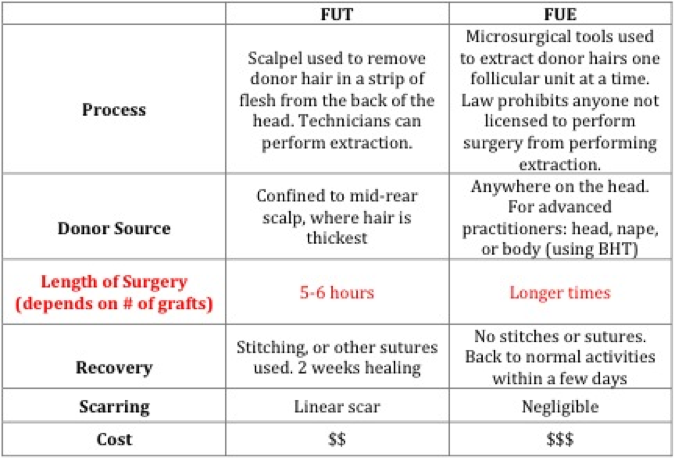
There two main techniques to perform implanting include:
- FUE
- FUT
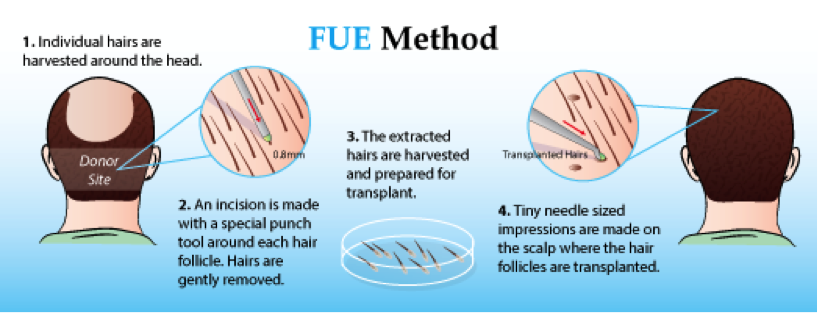
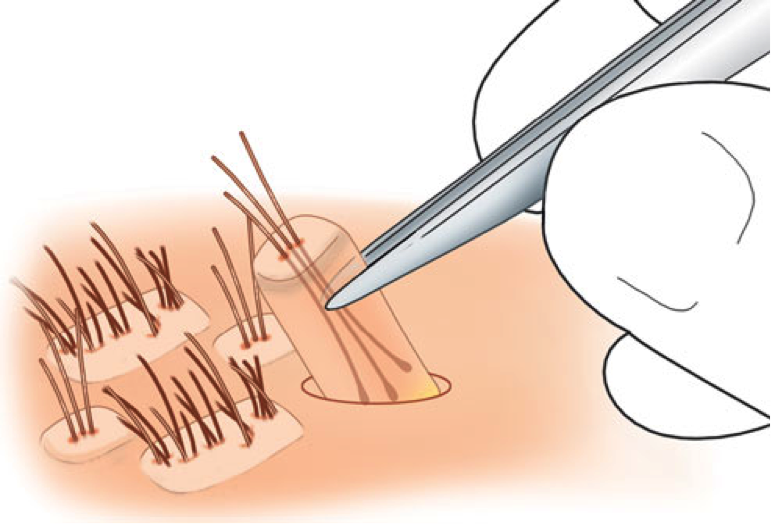
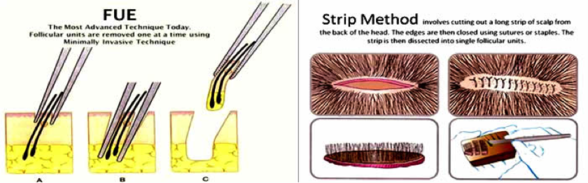
(FUE) method of hair transplant takes individual hair follicles ( grafts ) from back of head (donor area) or beard , chest , pubic area ,other body parts and transplants them into the area of thinning/ baldness. Follicles are implanted at a very specific angle & pattern which gives natural results. The whole process takes place under local anaesthetia.
This option -
(FUE) is preferred by those who are concerned about visible scarring that can be encountered with other methods & by those clients who intend to have very short hairstyles.
This technique of surgical hair transplant
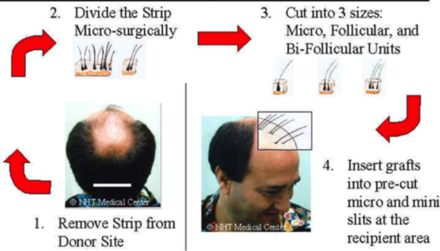
(FUT) involves removing strips of hair instead of individual hair follicles, from donor areas at the back or sides of the head. The surgeon then removes the individual hair units (comprising of 1-3 hairs) and implants these individually into the area of thinning or baldness.
When performed by Qualified Plastic Surgeons scar is very thin & with the latest TRYCHOPHYTIC CLOSURE TECHNIQUE offered by plastic surgeons hairs grow through the scar which makes it inconspicuous.
This technique is prefered when graft requirement is high (3000-4000) & patients with curly hairs
Duration:
The procedure takes place under local anaesthetia. From start to finish, it normally lasts between 4-7 hours depending on the area to be treated.
Both FUT and FUE have good long term results . But when graft requirement is more FUT is a better option . But when grafts requirement is less FUE is better as it gives better scarring , less painful , early results when done by an expert
Other types of hair transplant surgeries involve implanting hair on other parts of your body apart from your head.
Such types include:
Post Procedure
Recovery at the Hospital
If you have had a flap surgery or other extensive type of hair transplant surgery, you may require to stay back at the hospital after surgery. Other techniques of hair transplant are out-patient and do not involve hospital stay after surgery.
Based on the extent of your surgery, you may experience some problems during your hospital stay post surgery. If you are injected with general anesthesia, it is possible that you may experience numbness after the surgery is finished. At such times, your doctor will ask you to rest for some time until the influence of anesthesia wears off. You can also experience heavy pain, and throbbing during the stay which is followed by slight discomfort. Your doctor will provide or inject certain medication to ease your pain. Post operative antibiotics are also prescribed to you to avoid any occurrence of graft wounds or other infections.
Nurses will cover your surgical sections with cotton bandages followed by cotton dressing to keep the bandages intact at one place. This also helps to prevent bleeding. Doctor can check whether there are any signs of infection or other abnormal condition developing. Necessary treatments will be carried out if there is occurrence of any such issues.
Recovery at Home
It is likely that patients experience pain and discomfort for some days post surgery. Some patients also experience intense throbbing in your scalp region. Take necessary pain killers prescribed by your doctor to get relief from such problems. Follow all the important instructions provided by your doctor for a better healing. Also, make sure you take necessary precautions as well.
For earlier few days of your surgery, your surgical areas will be swollen. You can also experience bruising and a tight feeling around your wounds. When you undergo healing, there can be a development of small scabs over your wounds. Your doctor will guide you on how to deal with all these issues at home.
Follow-up Appointments
The main aim of conducting follow-up appointments after hair transplant surgery is to monitor your recovery process. Doctor will also check how well are the medicines working and improving your health condition. If there are any other problems seen, he/she will carry out treatment measures to fix them.
Follow-up sessions also involve removal of your old bandages and replacing them with new fresh ones. This also includes cleaning your wounds with anti-septic solution unless they heal completely. Such steps are carried out in order to avoid the occurrence of infections.
Precautions
When you have undergone a surgery, along with following necessary instructions, it is also important to follow all the precautions. These precautions are taken to avoid any complications.
Precautionary measures after a hair transplant surgery include:
- Do not let your surgical areas get exposed to water
- Avoid bending, or any other activities that can put a strain on your wounds
- Avoid drinking and smoking when you are under medications
- Avoid wearing caps or any other things to cover your head
- Avoid exercise or rigorous movements
Risks And Complications
There can be some possible risks involved after your hair transplant surgery. It is advisable to be prepared for some of these common risks and complications that may likely occur.
- Side effects of general anesthesia, causing allergy
- Unusual bleeding
- Infections
- Nerve damage which can have adverse effects of your sensation
- Redness
- Swelling of your scalp
- Scarring
- Itchiness on your scalp
- Skin graft failure
- Death of tissues around your wounds
- Abnormal growth of hair
- Numbness
- Formation of scabs
- Inflammation of hair follicles
Some possible complications may also occur out of a hair transplant surgery. Your scalp may stretch back in time and causing the bald spot to reoccur. Also pulling and tightening the skin from the donor's site can reduce elasticity from that area. It can also loosen the scalp causing low hair density.
Sutured areas of your scalp may show large visible scars. Patients may also experience 'slot deformity' development around the hair implanted areas. A slot deformity refers to change in the direction of your hair leading to hair growth at abnormal directions. It can either look like a partition or circular slot.
The above article, illuminates us about hair transplant surgery. Various information regarding hair implantation or hair restoration is also explained. Also, risks and complications associated with this surgery are mentioned. If you are planning to go for a hair transplant surgery, make sure you select the best and suitable method for a better appearance.